Classic and Collector Cars for Sale in Mesa, Arizona
AZ Auto Gallery keeps classic and collector cars in regular rotation at our lot on East Main Street in Mesa, near the Main and Recker corner in East Mesa. This page is the hub for the older end of what we carry, and the grid below groups the current cars by era. Every car here is one set price with no negotiation, so the number on the listing is the number you pay. If you are working out a monthly figure, our car payment calculator will get you close. When the grid is empty, it just means the collector stock is between cars, which happens often, so it is worth checking back, or giving us a call to ask what is coming in.
On the floor now
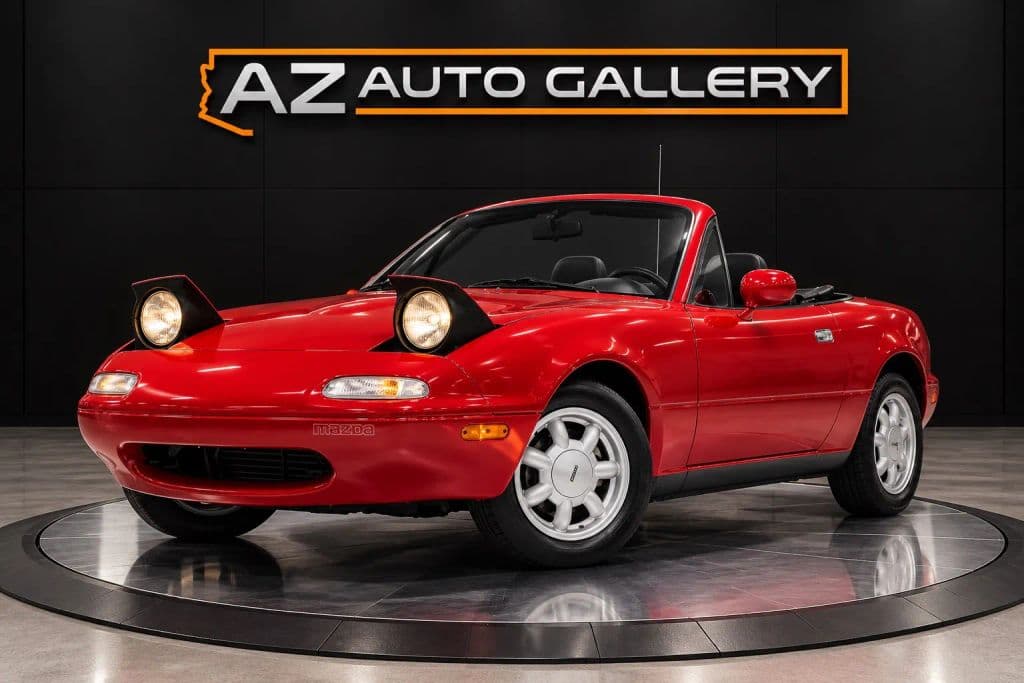
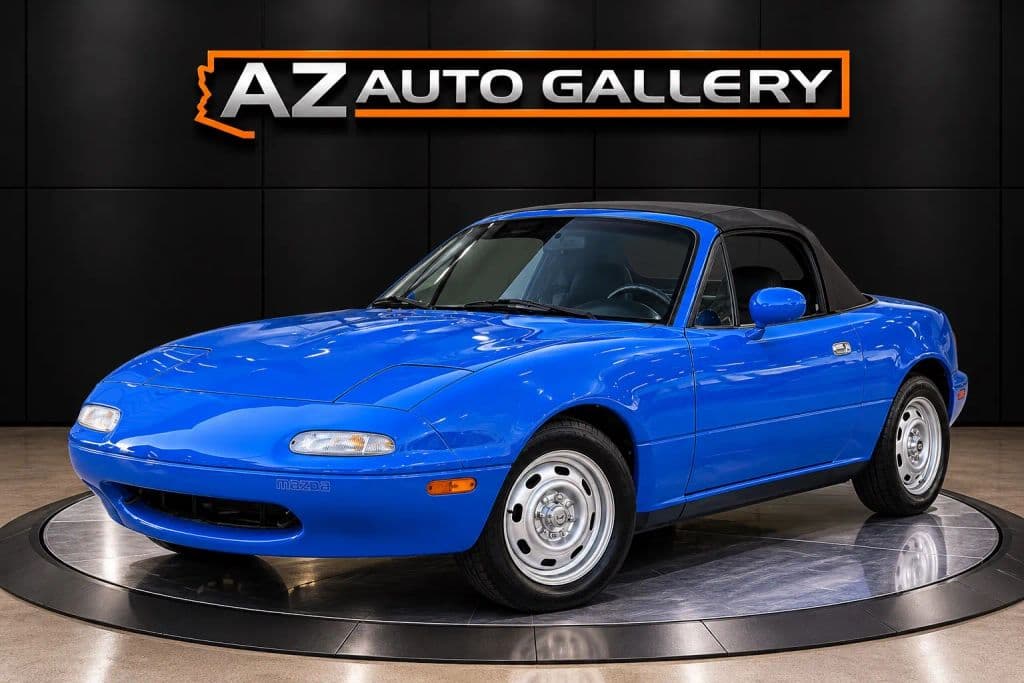
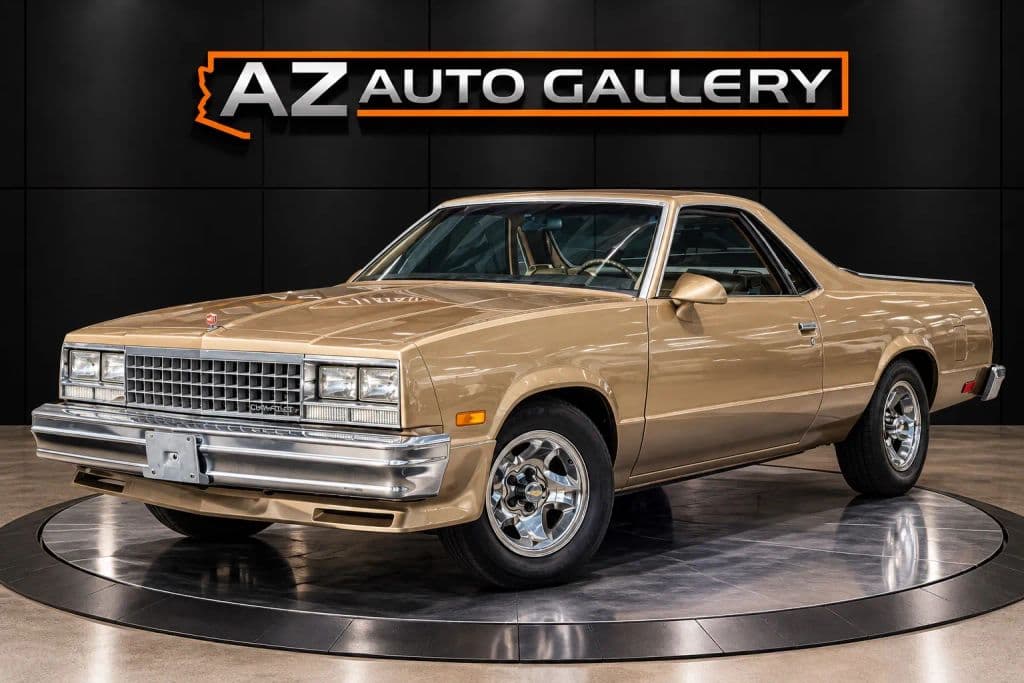
Where the line is
Two things decide whether a car lands on this page instead of the modern exotics and enthusiast cars page. The first is age. If a car is roughly 25 model years old or older, it sits here. The second is the technology under the hood. OBD-II onboard diagnostics became mandatory on all 1996 and newer passenger vehicles sold in the United States, so a car built for the 1995 model year or earlier generally predates that standard and belongs in this collection. That line matters for more than nostalgia. A pre-OBD-II car is read, tuned, and registered differently than a late-model turbo car, and in Arizona it can fall under separate emissions and plate rules that we cover further down this page. Late-model supercars, modern performance cars, and newer limited editions route to the enthusiast and exotic page instead.
Why a Phoenix car is worth more than the same car from Ohio
The single strongest argument for buying an older car in the Phoenix area is what is not there. Arizona does not salt its roads in winter, and the dry climate means the sheet metal, frame rails, floor pans, and rocker panels on a car that has lived here tend to stay solid while the same model from Ohio, Michigan, or anywhere in the salt belt is quietly rusting from the underside up. On a collector car, where body rust is expensive and sometimes impossible to undo correctly, that difference shows up directly in value and in what a car is worth restoring.
The honest counterweight is that the desert takes its own toll, just higher up and out of sight of the rust you were worried about. Decades of direct sun chalk and fade single-stage paint. Dashboards crack and warp. Weatherstrip perishes, vinyl and interior plastics harden and split, and rubber fuel lines and seals dry out and turn brittle from years of heat. A clean Arizona body can still sit on tired rubber and sun-baked trim, so the smart move is to look closely at the soft parts, not just the panels, and price the car for what it will actually need.
Registering an old car in Arizona: plates, emissions, and what you pay
Arizona gives older cars their own lane in the registration system, and the rules are worth knowing before you buy. The state offers a Historic Vehicle plate for any car with a model year date of original manufacture that is at least 25 years old, or that appears on a list of historic vehicles filed with the state by a recognized historic or classic vehicle organization, under A.R.S. 28-2484. There is also a separate Classic Car plate for vehicles that appear on the Classic Car Club of America list filed with the Motor Vehicle Division. Both special plates cost $25 for the initial application and $10 to renew each year, and ADOT may require a vehicle inspection.
Emissions are the part most buyers ask about. In the Phoenix-area testing region, a motor vehicle manufactured in or before the 1966 model year is exempt from emissions inspection under A.R.S. 49-542, and new vehicles are exempt until the sixth registration year after purchase or lease. The statute also carves out a collectible vehicle exemption: a car qualifies if it carries a model year date of original manufacture at least 15 years old, or is of unique or rare design, of limited production, and an object of curiosity. To use that exemption the car has to be kept mainly for car club activities, exhibitions, parades, other public events, or a private collection and rarely driven otherwise, and it must carry collectible or classic automobile insurance that restricts the car's mileage or use and requires the owner to keep another vehicle for personal use. If that specialty coverage is cancelled or lapses, the statute requires the state to cancel both the registration and the emissions exemption unless proof of coverage is provided within 60 days.
What you pay in vehicle license tax follows Arizona's standard declining-value formula rather than a flat collector rate. Under A.R.S. 28-5801, the tax is assessed on a value equal to 60 percent of the manufacturer's base retail price for the first year, and that assessed value drops by 16.25 percent for every year the car has been registered, down to a statutory minimum of $10 a year. Because that value keeps falling, a genuinely old car usually sits at or near the floor. Rather than restate the full math here, run your specific car through the state estimator, and see our full walkthroughs on how to register a car in Arizona and on Arizona emissions testing.
Agreed value, not actual cash value
One piece of owning a collector car catches people off guard at claim time, and it is worth sorting out before you drive away. A standard auto policy pays actual cash value, which means the insurer's depreciated estimate of the car at the moment it is totaled or stolen. For an appreciating classic that can be a fraction of what the car is actually worth and what you paid. Collector and classic-car policies instead work on an agreed value basis: you and the insurer set a figure in writing up front, usually backed by photos and documentation, and that is the amount paid on a total loss, with no depreciation argument after the fact.
This is also the same kind of specialty coverage the state asks for when you claim the collectible vehicle emissions exemption described above, so it tends to do double duty. AZ Auto Gallery does not sell insurance and does not steer you toward any particular company. We are flagging it because an agreed-value policy is one of the few things that genuinely protects the money you put into a collector car, and it is far easier to arrange before a loss than to argue about after one.
Living with an old car in a Phoenix summer
Buying the car is the easy part. Keeping an older car happy through a Phoenix summer is its own skill, and most of it comes down to heat and what heat does to old materials. Carbureted cars can suffer vapor lock when fuel boils in the lines and pump on a brutally hot afternoon, which is why many owners run insulation, phenolic spacers, or an electric pump. Factory air conditioning on anything from the 1990s or earlier was charged with R12 refrigerant, which is no longer produced, so a working system has usually been converted to R134a or a modern substitute, and that conversion is worth asking about.
Ethanol in modern pump gas is hard on the old rubber fuel lines, seals, and diaphragms that a desert car has already baked, so soft parts on a car that has sat deserve a close look. Batteries and tires both age out faster in this climate than most people expect, and a tire that looks fine can be too old to trust regardless of tread, so check the date codes. If the car is going to sit, a battery tender, a shaded or covered space, and a sane approach to washing and protecting single-stage paint will do more to preserve value than almost anything else. None of this is a reason to avoid an older Arizona car. It is simply the cost of admission, and it is a lot cheaper than chasing rust.
Questions about buying and registering an old car here
- What counts as a classic or collector car at AZ Auto Gallery?
- We draw the line two ways. A car belongs on this page if it is roughly 25 model years old or older, or if it predates OBD-II onboard diagnostics, which became mandatory on all 1996 and newer passenger vehicles sold in the US. So 1995 and earlier cars live here. Modern supercars, late-model performance cars, and newer limited editions sit on our enthusiast and exotic page instead.
- Do classic cars need emissions testing in Arizona?
- It depends on the car and where it is registered. In the Phoenix-area testing region, a vehicle manufactured in or before the 1966 model year is exempt from emissions inspection under A.R.S. 49-542, and new cars are exempt until their sixth registration year. Many collector cars newer than 1966 still test unless they qualify for the separate collectible vehicle exemption, which carries its own insurance conditions.
- How does the Arizona collectible vehicle emissions exemption work?
- Under A.R.S. 49-542, a car qualifies if its model year of original manufacture is at least 15 years old, or if it is of unique or rare design, limited production, and an object of curiosity. It must be kept mainly for club events, shows, parades, or a private collection, and it must carry collectible or classic-car insurance that limits mileage or use and requires you to own another car for daily driving. Let that coverage lapse and the exemption can be cancelled.
- What is the difference between Historic Vehicle and Classic Car plates in Arizona?
- A Historic Vehicle plate is available for any car whose model year of original manufacture is at least 25 years old, or that appears on a list filed with the state by a recognized historic or classic vehicle organization. A Classic Car plate is for vehicles on the Classic Car Club of America list filed with the Motor Vehicle Division. Both cost $25 to apply and $10 a year to renew, and ADOT may require an inspection.
- How much is vehicle license tax on an old car in Arizona?
- Arizona assesses vehicle license tax on a value equal to 60 percent of the manufacturer's base retail price, and that value drops 16.25 percent for every year the car has been registered, down to a minimum of $10 a year under A.R.S. 28-5801. Because the value keeps falling, a genuinely old car usually sits at or near that floor. Run your specific vehicle through the state estimator rather than guessing.
- I am buying from out of state. How does titling and registration work?
- You buy the car here and we hand you the Arizona title paperwork to transfer. You then title and register the car in your home state under that state's rules, paying its taxes and fees when you register. A lot of our out-of-state buyers want Arizona cars specifically because the dry climate means rust-free bodies. Check your own state's motor vehicle agency for its emissions, inspection, and title requirements before you travel.
- Does AZ Auto Gallery negotiate on collector car prices?
- No. Every car we sell, collector cars included, carries one set price with no haggling. The figure on the listing is the figure you pay, so there is no back-and-forth and no pressure to talk a salesperson down. We price each car where we think it should sit given its condition, history, and the market, and then we leave it there.
- What should I check before buying an older Arizona car?
- Arizona bodies tend to be rust-free, so spend your attention on what the sun and heat damage instead. Look closely at single-stage paint for chalking and fade, dashboards for cracks, and weatherstrip, vinyl, and interior plastics for drying and splitting. Check the rubber fuel lines and seals, and read the date codes on the tires, since a desert tire can age out while still looking fine. Price the car for what it will actually need.